

Selecting Clean Ingredients in Cannabis Edibles: 2026 Guide
Clean cannabis edibles are defined by three non-negotiable qualities: plant-based ingredients, natural sweeteners, and verified lab-tested purity. Selecting clean ingredients in cannabis edibles is not just a wellness preference. It’s the difference between a product that delivers consistent, safe effects and one that hides synthetic additives behind vague marketing language. This guide walks you through exactly what to look for on the label, how to read a Certificate of Analysis (COA), and why extraction method matters more than most consumers realize. The Greenhouse Dispensary carries products that meet these standards, so you have a real-world benchmark to compare against.
How to audit ingredient lists when selecting cannabis edibles
The ingredient list is the single most honest part of any edible package. Five core components determine whether a cannabis edible qualifies as clean: the gelling agent, sweetener type, flavor source, coloring agent, and cannabis extract type. Each one tells you something specific about how the product was made and what you’re actually putting in your body.
Gelling agents: pectin vs. gelatin
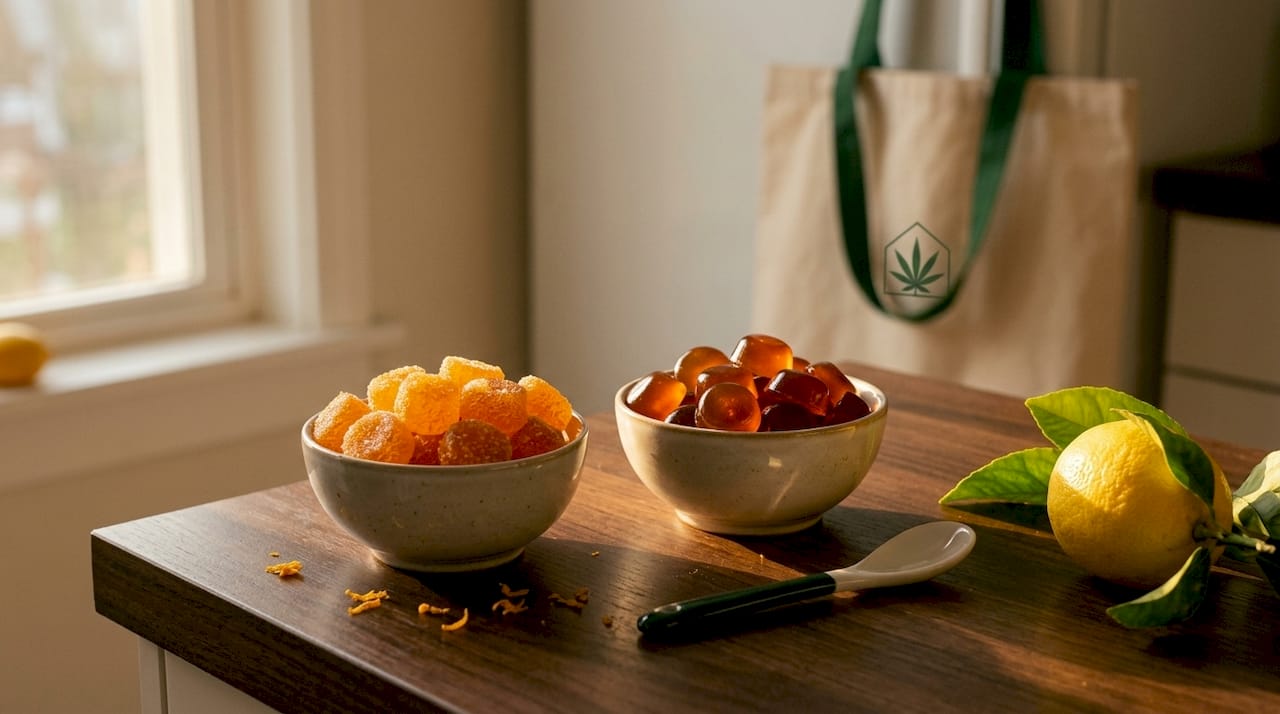
Pectin comes from citrus peel or apple skin. Gelatin comes from animal bones and connective tissue. For clean, plant-based edibles, pectin and agar-agar are the right choice. They also avoid carmine, a red dye derived from insects that appears in some conventional gummies under names like “cochineal extract.”
Sweeteners and flavoring
Sugar alcohols like sorbitol, xylitol, and mannitol are common in sugar-free edibles and are known triggers for digestive discomfort. Natural fruit-derived sweeteners and real fruit juice concentrates are cleaner alternatives. Artificial flavors are listed generically on labels, which means you can’t trace their source. Real fruit extracts name the fruit directly.
Coloring agents and cannabis extract type
Synthetic dyes like Red 40 and Yellow 5 are petroleum-derived and offer zero nutritional value. Plant-based alternatives include beet juice, turmeric, and spirulina. For the cannabis extract itself, full-spectrum rosin delivers a broader cannabinoid profile than distillate. Understanding the difference between these extract types is covered in depth in this guide on low-THC vs full-spectrum edibles.
Pro Tip: Check the ingredient list for carrier oils. MCT oil improves cannabinoid bioavailability and is easier on your gut than cheaper long-chain triglycerides. If the label just says “vegetable oil,” that’s a red flag.
What does a Certificate of Analysis actually verify?
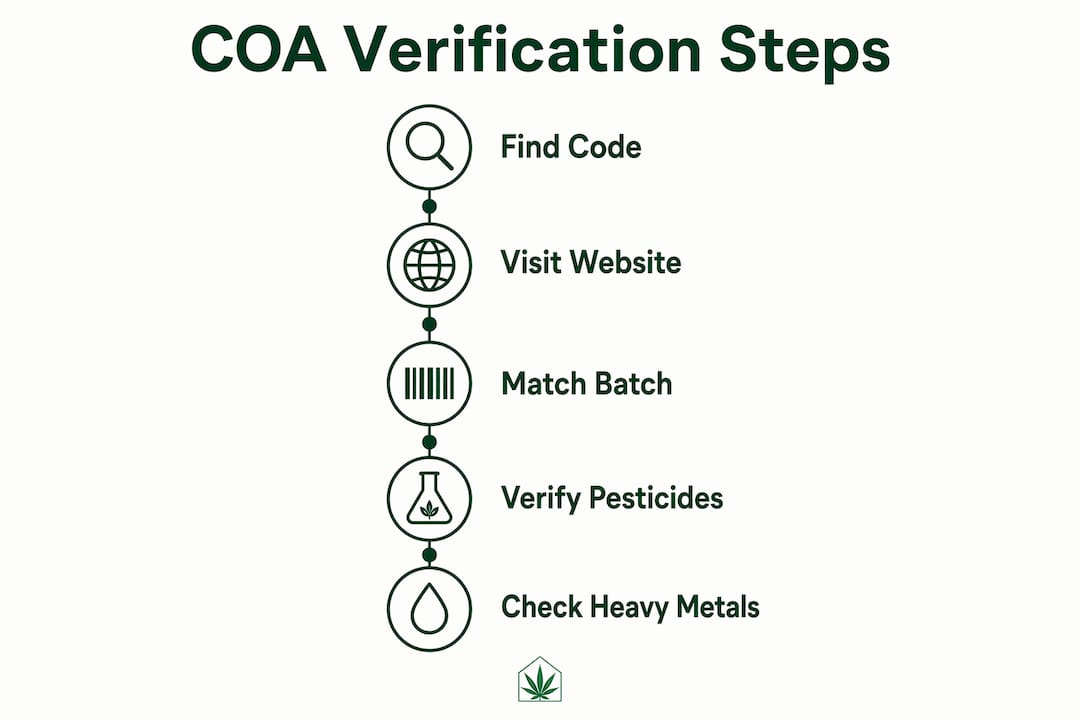
A COA is a third-party lab report that confirms what’s in your edible and what isn’t. Batch-specific COA cross-referencing is the most reliable way to verify product safety. Packaging alone can be mislabeled or outdated. The COA tied to your specific batch number is the ground truth.
A complete COA screens for five categories:
- Pesticide residues — confirms no agricultural chemicals carried over from the cannabis plant
- Heavy metals — screens for lead, arsenic, mercury, and cadmium
- Microbial contamination — checks for mold, yeast, E. coli, and Salmonella
- Residual solvents — critical for distillate-based products where chemical extraction is used
- Cannabinoid potency — verifies that the THC or THCA amount on the label matches reality
Most brands host COAs on their website or link them via a QR code on the packaging. If you can’t find a COA for your specific batch number, that’s a problem. Matching the batch number on the package to the COA is the step most consumers skip, and it’s the most important one. The Greenhouse Dispensary makes lab reports accessible so you can verify before you buy. You can learn more about what these reports contain in this breakdown of cannabis Certificate of Analysis standards.
Pro Tip: Don’t stop at the potency panel. Scroll to the pesticide and heavy metals sections of the COA. Those are the panels that reveal whether a product is genuinely clean, not just accurately dosed.
Why organic and plant-based ingredients matter for your health
USDA Organic certification and OMRI listings are the only reliable indicators of authentic organic sourcing. The word “natural” on a cannabis edible label carries no legal definition and no regulatory weight. A product can call itself natural while containing synthetic dyes and chemically processed sweeteners.
Here’s what to look for when choosing organic and plant-based options:
- USDA Organic seal on the packaging confirms that ingredients meet federal organic standards
- Pectin or agar-agar as the gelling agent instead of gelatin
- Real fruit juice or fruit extract as the flavor source, named specifically on the label
- Plant-based colorants like beet powder, turmeric, or spirulina instead of synthetic dyes
- No artificial preservatives such as sodium benzoate or potassium sorbate
The table below shows how plant-based ingredients compare to their conventional counterparts across key quality indicators.
| Ingredient Category | Plant-Based / Organic Option | Conventional Alternative | Why It Matters |
|---|---|---|---|
| Gelling agent | Pectin, agar-agar | Gelatin, carmine | Vegan-friendly, no animal byproducts |
| Sweetener | Cane sugar, fruit juice | Sorbitol, xylitol | Avoids digestive discomfort |
| Coloring | Beet juice, turmeric | Red 40, Yellow 5 | No petroleum-derived additives |
| Flavoring | Named fruit extract | “Artificial flavor” | Traceable, natural source |
| Cannabis extract | Full-spectrum rosin | Distillate | Broader cannabinoid profile, no residual solvents |
Organic sourcing also reduces your exposure to pesticide residues at the source, before the cannabis plant even reaches extraction. That upstream benefit compounds with every other clean ingredient choice you make. For a deeper look at natural flavoring in cannabis gummies, The Greenhouse Dispensary covers the topic in detail.
How does the extraction method affect edible purity?
The cannabis extract is the most potent ingredient in any edible. Its purity directly affects the cleanliness of the finished product. Solventless extraction methods like rosin and ice-water hash avoid the residual chemical solvents that distillate processing introduces.
Here’s how the main extraction types compare:
- Full-spectrum rosin uses heat and pressure only. No solvents. The result retains terpenes, minor cannabinoids, and the full plant profile. This is the cleanest option available.
- Ice-water hash uses cold water and agitation to separate trichomes from the plant. Also solvent-free and considered a premium clean extract.
- Distillate uses chemical solvents like butane or ethanol during processing. A well-made distillate can be clean if residual solvents are fully purged, but that requires verification through a COA.
Solventless extracts avoid residual solvents by design, not by process control. That’s a meaningful difference for health-conscious consumers. Distillate is not automatically unsafe, but it requires a COA that specifically passes the residual solvent panel before you can call it clean.
Common mistakes when choosing safe cannabis ingredients
The most common mistake is trusting marketing language over documentation. Terms like “natural” and “pure” are legally unregulated in the cannabis edible space. They signal nothing about actual ingredient quality or testing standards.
Watch out for these specific pitfalls:
- Vague ingredient listings like “natural flavors” or “cannabis extract” without specifying the extraction method or source
- No batch number on the packaging, which makes COA verification impossible
- Missing allergen information, particularly for tree nuts, soy, and gluten in infused baked goods
- Unlisted carrier oils, since the type of oil affects both bioavailability and digestive tolerance
Partial ingredient transparency often signals lower product quality and potential contaminants. A brand that hides behind incomplete labeling is telling you something important about its priorities.
Pro Tip: Keep a simple log of the edibles you try, noting the batch number, COA results, and how you felt. Reviewing batch tests and user feedback together is the most reliable way to confirm potency consistency across purchases.
Key Takeaways
Selecting clean cannabis edibles requires auditing ingredient lists, verifying batch-specific COAs, and choosing solventless extracts with USDA Organic or plant-based certified components.
| Point | Details |
|---|---|
| Audit five ingredient categories | Check gelling agent, sweetener, flavoring, coloring, and cannabis extract type on every label. |
| Verify batch-specific COAs | Match the package batch number to a third-party lab report covering pesticides, metals, and potency. |
| Choose solventless extracts | Rosin and ice-water hash avoid residual solvents by design, making them the cleanest extract options. |
| Reject unregulated marketing terms | “Natural” and “pure” carry no legal definition; look for USDA Organic certification instead. |
| Use MCT oil as a quality signal | MCT carrier oil improves bioavailability and indicates a brand that pays attention to formulation details. |
Why I stopped trusting the front of the package
Honestly, the front of a cannabis edible package is a marketing document. The back is where the real information lives. I’ve seen beautifully designed products with “premium” and “craft” printed in gold foil that had incomplete COAs, unlisted carrier oils, and sugar alcohols buried at the bottom of the ingredient list.
The shift that changed how I evaluate edibles was treating them exactly like dietary supplements. An educated consumer who reviews ingredient transparency and batch testing reports is more likely to get the therapeutic outcome they’re looking for. That’s not a soft claim. It’s the practical result of knowing what you’re consuming.
What I’ve found is that the brands worth trusting are the ones that make the COA easy to find, not buried behind a customer service email. The Greenhouse Dispensary posts lab results accessibly, which is the baseline I now expect from any brand I recommend. Ingredient quality and extraction method matter more than the THC percentage on the front. A clean 10mg edible from a solventless rosin extract will outperform a dirty 25mg distillate product every time.
— Ethan
Lab-tested edibles at The Greenhouse Dispensary

The Greenhouse Dispensary carries a rotating selection of clean, lab-tested cannabis edibles with full ingredient transparency. If you want a gummy with a verified COA and real fruit flavoring, Wyld Gummies are a strong starting point. They use pectin as the gelling agent and real fruit juice for flavor. For something different, the THCA Seltzer 4-pack delivers a clean, low-ingredient-count option with natural flavoring and lab-verified potency. Both products reflect The Greenhouse Dispensary’s commitment to quality you can actually verify, not just trust on faith. Free delivery applies on orders over $100.
FAQ
What does “clean” mean in cannabis edibles?
Clean cannabis edibles use plant-based ingredients, natural sweeteners, and cannabis extracts free from residual solvents. The claim must be backed by a third-party COA, not just marketing language.
How do I find the COA for my edible?
Look for a QR code or batch number on the packaging, then search the brand’s website for the matching lab report. Matching the batch number to the COA is the only way to confirm the test applies to your specific product.
Are sugar-free cannabis edibles actually healthier?
Not necessarily. Sugar-free edibles often contain sugar alcohols like sorbitol or xylitol, which can cause digestive discomfort. Natural fruit-derived sweeteners are a cleaner alternative for sensitive consumers.
What is the cleanest type of cannabis extract for edibles?
Full-spectrum rosin and ice-water hash are the cleanest options because they use no chemical solvents. Distillate can be clean if the COA passes the residual solvent panel, but it requires verification.
Why does the carrier oil in an edible matter?
MCT oil improves how your body absorbs cannabinoids and is gentler on digestion than cheaper long-chain triglycerides. The carrier oil affects both the effectiveness and the comfort of your edible experience.
Recommended
Before You Go…
Here are a few handpicked articles to inspire your next self-care moment.


