

What Is Single Source Cannabis and Why It Matters
Single source cannabis is defined as a production model where one operation controls every stage from genetic selection through final packaging, with no outside farms or processors involved. This is also called vertical integration in the cannabis industry. Understanding what is single source cannabis helps you make smarter choices about the products you buy, because where cannabis comes from directly affects what ends up in your body. At Tghhouston, we think every customer deserves to know exactly what they’re getting.
What is single source cannabis and how is it defined?
Single source cannabis is a model where one operation manages all stages of production, from genetics to final product packaging, at a single location or under one company’s control. That covers at least five production stages: genetic development, cultivation, harvesting, extraction or processing, and final packaging. Nothing gets handed off to a third party. Nothing gets blended with material from unknown farms.
The term “single source” is borrowed from food and coffee industries, where provenance matters. In cannabis, it carries the same weight. When you see it on a label, it means the team that grew the plant also dried it, processed it, and packed it. That’s a meaningful promise, not just marketing language.
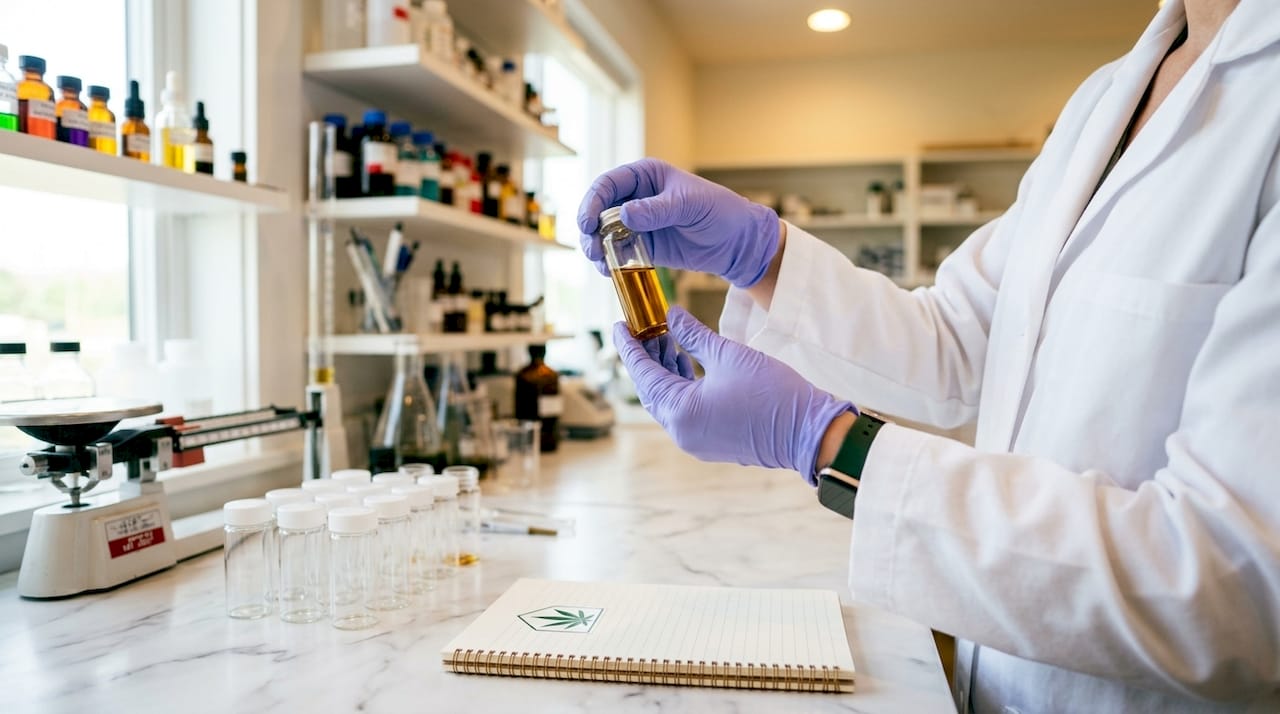
Multi-source products, by contrast, aggregate biomass from multiple farms. The processor may not know the exact growing conditions, pesticide history, or harvest timing of each batch. That uncertainty flows directly into the final product you consume.
How does the single source production model work?
Vertical integration in cannabis means one company owns and operates every step. Here’s how that typically breaks down:
- Genetic development. The operation selects or breeds its own cultivars, controlling the starting point for every batch.
- Cultivation. Plants grow under controlled conditions managed by the same team. Light cycles, nutrients, and humidity are dialed in for that specific genetic.
- Harvesting. The team decides the exact harvest window based on trichome development, not a delivery schedule from an outside farm.
- Extraction or processing. Fresh-frozen material moves directly to processing. For live resin, minimizing time between harvest and freezing preserves terpenes that would otherwise be lost during longer multi-source storage and transport.
- Packaging. The finished product is sealed and labeled by the same operation, with full documentation at every step.
This tight chain creates a feedback loop that generic bulk sourcing simply cannot replicate. Small-batch single source producers can fine-tune cultivation and processing incrementally, improving quality with every batch. A multi-source processor working with material from five different farms has no way to make that kind of targeted adjustment.
Pro Tip: When evaluating a cannabis product, look for batch-specific lab results that list the cultivar name and harvest date. That level of detail is a strong signal of true single source production.
What are the main benefits of single source cannabis?
The advantages of single source cannabis are real and measurable. Here’s what you actually gain as a consumer:
- Consistent quality across batches. Vertical integration reduces supply chain complexity and eliminates variability from multiple vendors. You get the same experience every time you buy the same product.
- Better terpene and cannabinoid preservation. Terpenes are the compounds that give cannabis its flavor and aroma. They degrade fast. A single source operation processes material immediately after harvest, locking in those profiles before they fade.
- Full traceability. Single source products enhance consumer transparency, enabling you to verify exactly how and where your cannabis was grown and processed. This matters especially if you prioritize clean, organic, or solventless products.
- Stronger accountability. When one team owns every step, there’s no one else to blame for a bad batch. That ownership incentivizes higher standards.
- Potential cost savings over time. Vertical integration cuts costs by eliminating middlemen. Those savings can eventually reach the consumer, though the upfront investment in licenses and operations is significant.
“Consumers increasingly view single source as a marker of transparency and traceability rather than luxury. It reduces the risk of contamination and builds genuine trust.” — industry analysis on vertically integrated cannabis
Understanding these single source cannabis benefits helps you cut through marketing noise. A premium price tag means nothing without the production model to back it up.
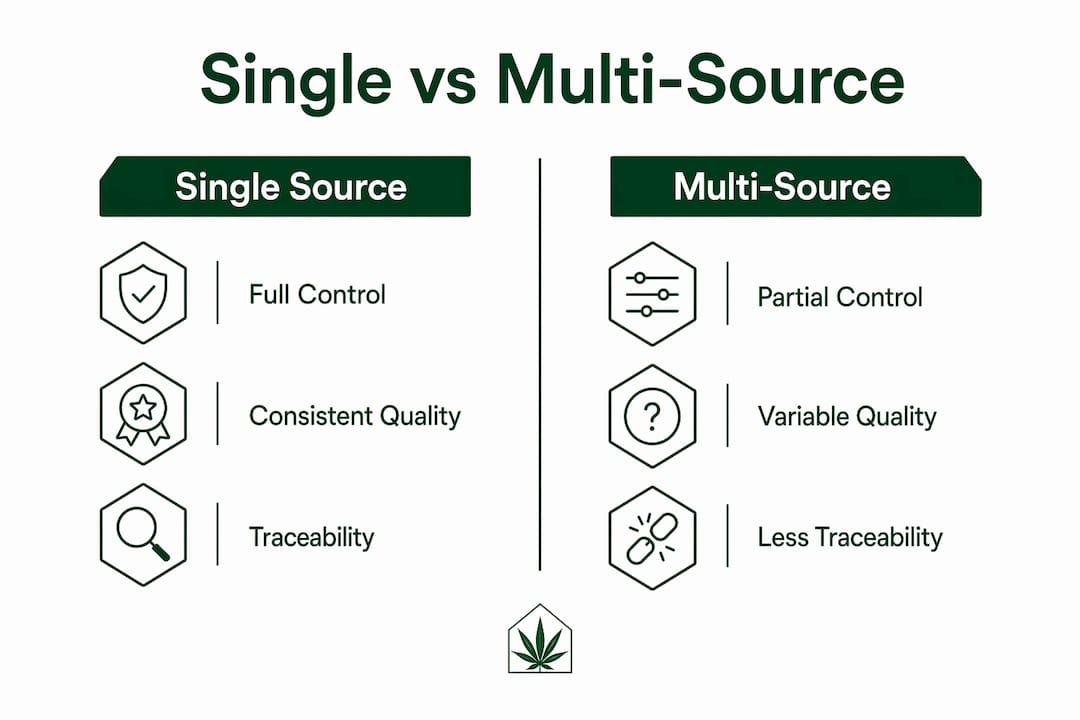
How does single source cannabis differ from multi-source products?
Traditional cannabis products often blend biomass from multiple farms. Quality varies by harvest, by farm, and by season. The processor buying that material has limited visibility into how it was grown.
Multi-source supply chains increase the risk of contamination, inconsistent terpene profiles, and diluted effects. When you mix material from five farms, you average out the best qualities of each. You also average out the worst.
Single source operations close that gap with a tighter feedback loop. Producers continuously tweak harvest, drying, and pressing techniques based on batch feedback, a benefit unavailable to processors relying on generic sourced material. That’s the difference between a craft product and a commodity.
One common misconception is that branded packaging equals single source control. It does not. A brand can slap its logo on products sourced from a dozen different farms. True single source means the brand grew it, processed it, and packed it.
| Attribute | Single source | Multi-source |
|---|---|---|
| Production control | Full, one operation | Partial, multiple vendors |
| Traceability | Complete, batch-level | Limited or unavailable |
| Product consistency | High, same process every batch | Variable, depends on farm mix |
| Quality feedback loop | Direct and continuous | Slow or nonexistent |
| Consumer trust | High, verifiable provenance | Lower, opaque supply chain |
Pro Tip: Ask your budtender or retailer for a certificate of analysis that lists the specific cultivar and production location. If they can’t provide one, that’s a red flag for multi-source blending.
What cannabis products benefit most from single source methods?
Some products demand single source production. Others benefit from it. Here’s where it matters most:
- Live resin and liquid live resin. These products require fresh-freezing immediately after harvest. Single source cultivation is essential for preserving the plant’s delicate terpene and cannabinoid profile. A multi-source operation simply cannot guarantee that timing. Check out Tghhouston’s liquid live resin collection to see what this looks like in practice.
- Solventless concentrates (rosin, hash). These products are made by applying heat and pressure to plant material, with no chemical solvents involved. Single source control allows producers to accurately label micron ranges for solventless products like hash rosin, which is often unreliable in multi-sourced operations. That precision matters for both potency and safety.
- Full-spectrum oils and vape cartridges. Full-spectrum products preserve the complete cannabinoid and terpene profile of the original plant. A 2015 trial indicated up to 71% improved efficacy at lower doses for whole-plant extracts versus isolated compounds, a phenomenon known as the entourage effect. Single source production is the most reliable way to preserve that effect.
- THCA flower. The cultivation conditions for THCA flower directly affect potency and terpene expression. Single source growers optimize harvest windows for each specific cultivar rather than harvesting on a bulk schedule.
The entourage effect is the reason why full-spectrum, single source products often feel more effective than isolate-based alternatives. It’s not placebo. It’s chemistry preserved by careful, controlled production.
Key takeaways
Single source cannabis is the most reliable production model for consistent quality, full traceability, and preserved terpene and cannabinoid profiles from seed to final product.
| Point | Details |
|---|---|
| Single source definition | One operation controls all five stages: genetics, cultivation, harvesting, processing, and packaging. |
| Quality consistency | Eliminating multiple vendors removes batch variability and keeps product quality uniform. |
| Terpene preservation | Immediate post-harvest processing locks in terpenes that degrade during multi-source storage and transport. |
| Traceability advantage | Consumers can verify exact provenance and growing conditions, reducing contamination risk. |
| Entourage effect | Full-spectrum single source extracts preserve cannabinoid and terpene synergies shown to improve efficacy. |
Why single source is the standard serious cannabis consumers should demand
Honestly, the more time I’ve spent paying attention to cannabis quality, the more I’ve come to see single source as the baseline, not the premium. The industry has a long history of impressive packaging hiding mediocre sourcing. Fancy labels and bold claims are easy. Growing your own genetics, harvesting at the right moment, and processing immediately takes real commitment.
What I’ve found is that consumers who start asking “where was this grown and who processed it?” quickly stop accepting vague answers. Single source producers can answer those questions specifically. Multi-source brands often can’t, or won’t. That gap in accountability tells you everything.
The market is shifting. Sophisticated cannabis consumers now treat single source the same way wine drinkers treat estate-bottled wines. It’s not about exclusivity. It’s about knowing the product reflects one team’s craft and judgment, not an average of whoever had biomass available that week.
One thing worth watching: not every single source claim is honest. Single source implies full process control but does not guarantee excellence. Quality still depends on operator skill. The label is a starting point for trust, not a substitute for lab results and batch-specific data. Always pair provenance claims with a certificate of analysis before you commit to a product.
— Ethan
Single source quality at Tghhouston
At Tghhouston, we’re serious about what goes into every product on our shelves. Our two Houston locations, EaDo on Polk Street and Spring Branch on Long Point Road, are open 24/7 so you can grab what you need when you need it.

We stock lab-tested products that reflect the single source philosophy: consistent potency, clear provenance, and no guesswork about what you’re consuming. If you want to experience what vertically integrated quality actually tastes like, our THCA seltzer is a great starting point. Clean, consistent, and made with the same attention to sourcing we apply across our entire catalog. Free delivery on orders over $100 makes it even easier to stock up.
FAQ
What is the single source cannabis definition?
Single source cannabis means one operation manages all production stages, from genetic development through final packaging, with no third-party farms or processors involved. It is also called vertical integration in the cannabis industry.
Why does single source matter for terpene quality?
Terpenes degrade quickly after harvest. Single source operations process material immediately, preserving the terpene profile that would be lost during the storage and transport delays common in multi-source supply chains.
Is single source cannabis always better quality?
Single source production assures traceability and process control, but quality still depends on the skill of the operator. Always check batch-specific lab results alongside any single source claim.
What products benefit most from single source cultivation?
Live resin, liquid live resin, solventless rosin, and full-spectrum oils benefit most. These products require precise harvest timing and immediate processing that only a single source operation can reliably deliver.
How can I verify a single source cannabis claim?
Ask for a certificate of analysis that lists the specific cultivar, harvest date, and production location. Legitimate single source producers provide batch-level documentation that traces the product back to a single growing operation.
Recommended
Before You Go…
Here are a few handpicked articles to inspire your next self-care moment.


